For your school

Your school takes part. Your school receives.

Clear reports. A live command center. The Emotional Wellbeing Decalogue. No diagnoses: evidence with professional review.


Ethics CommitteeGDPR and LOPDGDDAggregated reporting
Sessions
4 × 30′
Short and integrated into the school routine.
Target population
6th Primary -> 4th ESO
Public, publicly funded and private schools.
Planned sample
Up to 6,000
Nationwide study.
Supported by
University of La Laguna Universidad Europea CEU Cardenal Herrera PAS España UDIMA IDUE Fundespas Psicometrik

The starting point

Earlier than we think.

Not an alarm. A reason to look more closely.

50%
of mental health difficulties begin before age 14
WHO, 2021
≈20%
of the population shows high sensitivity
Aron and Aron, 1997

The classroom usually sees it first. ASSMA turns that insight into evidence: organised, prudent and useful.

The deliverables

This is what your school gets.

Nothing abstract. Concrete documents and dashboards, with professional review behind them.

01

Individual reports

Technical and operational. The operational report summarises the priority sensitive information, with a clear indicator for the counselling team.

02

Aggregated reports

By class, by year and by school. From the executive summary to the recommendations, colour-coded.

03

Command center

The pulse of the project in real time. Participation, progress and the aggregated picture, ready to present.

04

Role-based guide

Operational instructions for management, coordination, tutoring and counselling, with student access codes.

05

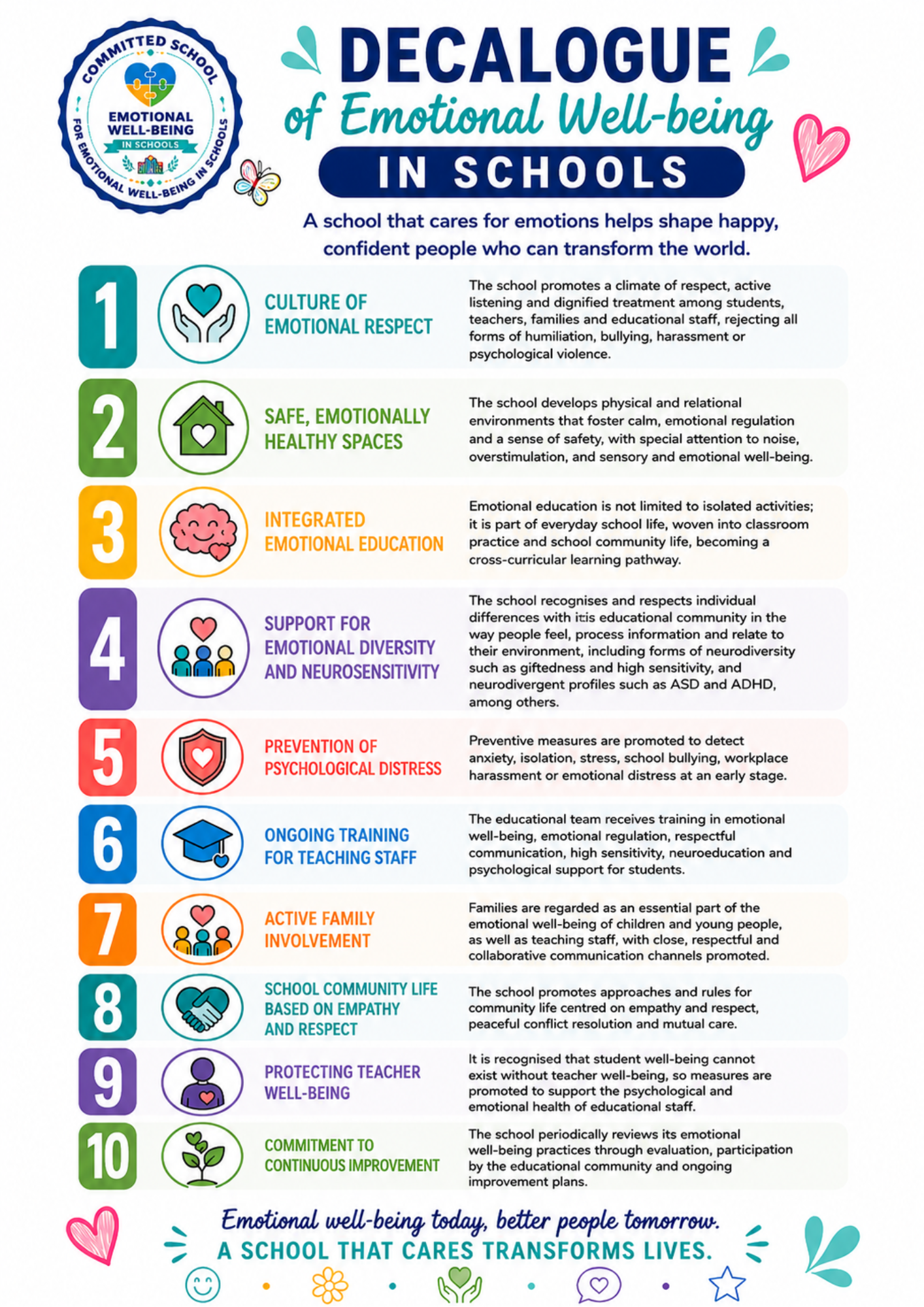
Decalogue and seals

The Emotional Wellbeing Decalogue for Schools and the member school and committed school seals.

ASSMA does not diagnose. No individual result is delivered without professional review.

In the open

How the project is going, live.

We don’t just tell you. See it.

Collection coverage
Responses against the target.
Schools and territory
Participating schools, islands and provinces.
Activity
Completed questionnaires, by week and month.
Stages
Distribution across Primary, ESO and Bachillerato.
View the command center ◇ Next intake open

No names, no identifiable groups and no personal data. Low-volume breakdowns are omitted to protect small groups.

Responsible use

If something matters, the right people see it.

Risk indicators with an alert protocol for the counselling team. With clear limits: we state them before you ask.

It does

What ASSMA contributes.

  • It triggers an alert protocol addressed to the counselling team.
  • It enables professional review of the results.
  • It delivers aggregated results to the community.
  • It supports prevention and the school’s continuous improvement.
It does not

What ASSMA is not.

  • It does not issue psychological or clinical diagnoses.
  • It does not detect disorders automatically.
  • It does not deliver individual results without professional review.
  • It does not assess students without prior family authorisation.

ASSMA does not diagnose. It generates evidence.

The process

Four steps. 30-minute sessions.

Integrated into tutoring and coordinated with the counselling team. No names or emails: school codes and list numbers.

01

Preparation

Coordination with management and counselling. Information for families and consent management.

02

Delivery

4 sessions of about 30 minutes, spread over several weeks. Students log in with their code.

03

Analysis

Patterns across sensitivity, mental health and risk and protective contexts.

04

Reporting

Reports for the school and public aggregated reporting.

The first thing you were going to ask, already answered: without family authorisation, no information is collected from the minor. The study is submitted to a Research Ethics Committee and follows the GDPR and LOPDGDD.

ASSMA video

How it works, in 2 minutes.

A direct presentation to understand the scope, the purpose and how to take part before requesting information for your school.

Applied researchSchoolsInformed participation
◇ Next intake open

Add your school to research that cares for every detail.

Request information, receive the decalogue and, if it fits, the team will explain the scope, permissions and timeline. No obligation.

Ethics CommitteeAggregated reportingNationwide study
Request information for my school View the live panel

We respond to each school personally.

Project email
moibemo@ull.edu.es
Basic data-protection information
  • Controller: Research Group ASSMA (University of La Laguna). Contact: moibemo@ull.edu.es.
  • Purpose: to handle your request, assess possible school participation and maintain communications related to ASSMA, emotional well-being, emotional education, neurodiversity and mental health in education.
  • Rights: access, rectification, erasure, objection, restriction, portability and withdrawal of consent by writing to moibemo@ull.edu.es. You may lodge a complaint with the Spanish Data Protection Agency.

Additional information in the privacy policy and legal notice.